Demos
Demos  Colors
  Docs
Docs  Support





Maybe It’s Not Your Taste in Partners. Maybe It’s Your History.
How our experiences quietly shape the way we love
Have you ever found yourself thinking,
“Why does this keep happening?”
Different person, same ending.
Perhaps you’ve found yourself attracted to people who aren’t emotionally available.
Maybe you’ve ignored the red flags, hoping this time would be different.
Perhaps you’ve stayed in relationships longer than you wanted because walking away felt harder than staying.
Or maybe you’ve stopped dating altogether because it simply feels too exhausting.
It’s easy to believe we’ve just been unlucky.
Sometimes we have.
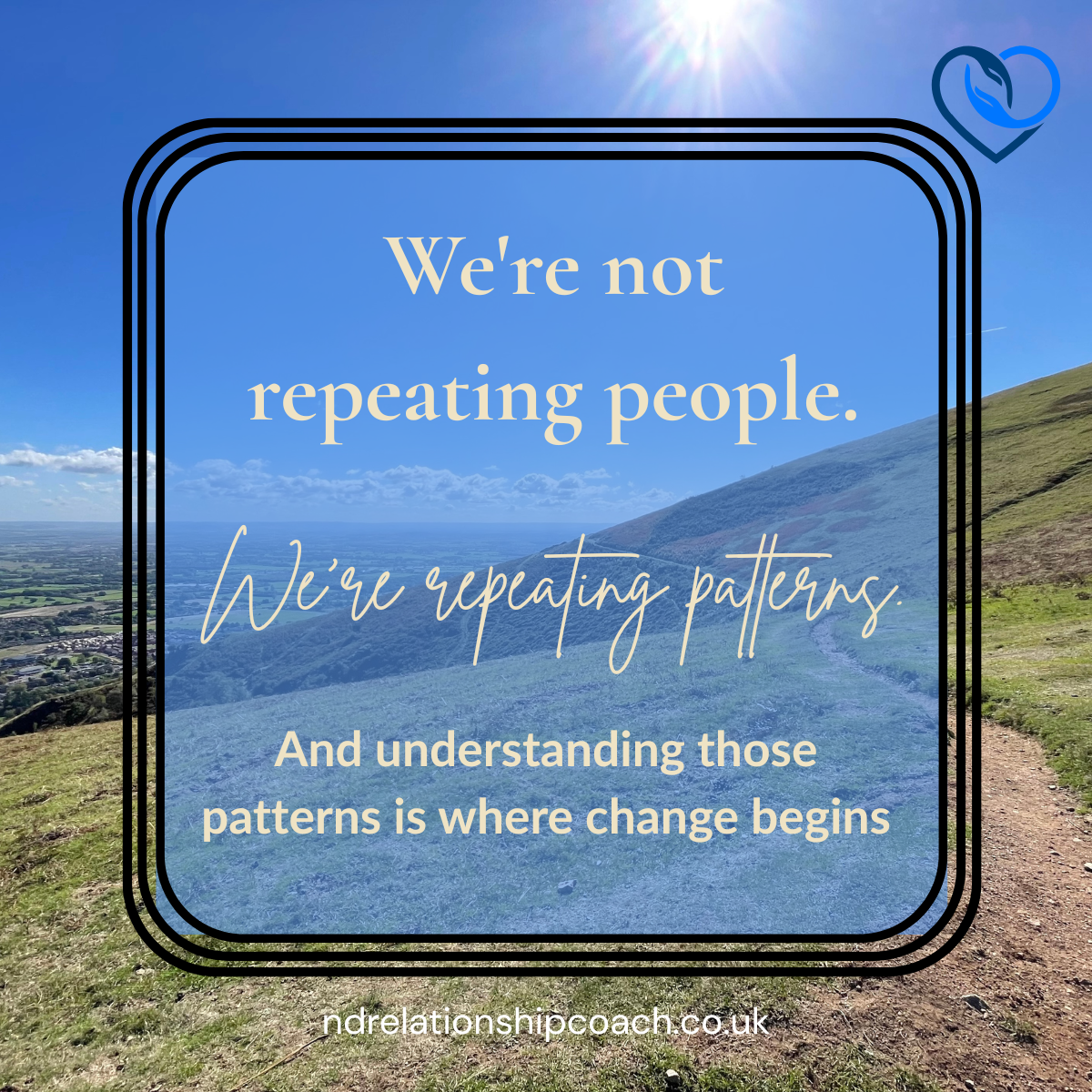
But sometimes we’re not repeating people.
We’re repeating patterns.
That isn’t about blame. It’s about understanding.
Because once we begin to understand ourselves, we also begin to understand the choices we make, the relationships we build, and the reasons some people feel instantly familiar while others don’t.
None of us arrive in adulthood with a blank page.
We were already learning what love looked and felt like.
Not through advice or relationship experts, but through the people around us and the experiences we had every day.
We learnt through the conversations we heard.
The affection we experienced.
The conflict we witnessed.
The way we were comforted.
The way we were spoken to.
What felt safe.
And what didn’t.
We didn’t realise we were learning at the time.
We were simply growing up.
Yet those early experiences often become part of the lens through which we see ourselves, other people and relationships.
And years later, those early experiences can quietly influence how we respond when someone gets close.
When you think about relationships growing up… What did you learn love was supposed to feel like?
People often ask whether it’s childhood, attachment, neurodivergence or past relationships that shape the way we love.
The honest answer?
I don’t think it’s that simple.
To me, it’s a bit like baking a cake.
You begin with separate ingredients.
Flour. Eggs. Sugar. Butter.
You can clearly see each one.
But once they’re mixed together and baked, you can’t separate them again.
Our lives can feel much the same.
Childhood experiences.
Being neurodivergent.
The messages we heard about ourselves.
Past relationships.
Friendships.
Loss. Heartbreak.
Joy. Success.
Disappointment.
They all become part of us.
Sometimes we spend years trying to understand what has shaped us.
I think that’s a very human thing to do.
Understanding our story can bring compassion.
It can help us make sense of experiences that once felt confusing.
Sometimes it helps us realise there was never anything “wrong” with us in the first place.
But understanding isn’t the final destination.
Quite often, it’s the beginning.
Because once we begin to understand ourselves, we can gently ask a different question:
“How is this showing up in my relationships today?”
“Is this pattern helping me build the relationship I want?”
We can’t change what has shaped us.
But we can become more aware of how those experiences influence us now.
And with awareness comes choice.
When you see the world differently
For many neurodivergent women, relationships can bring another layer of complexity.
Perhaps you’ve spent years masking without even realising it.
Trying not to interrupt.
Trying not to overthink.
Trying not to be “too much.”
Trying not to ask for too much.
Trying to understand everyone else before trusting your own instincts.
Over time, you can become so skilled at adapting to other people’s expectations that you lose sight of your own.
You stop asking,
“What do I need?”
And start asking,
“What do they need from me?”
I know that feeling because, for years, I thought relationships were about trying harder.
Trying to be easier to love.
Trying to say the right thing.
Trying to become the person I thought someone else wanted.
Looking back now, I wasn’t really asking,
“Can I be myself with this person?”
I was asking,
“What do I need to do so they don’t leave?”
When I received my ADHD diagnosis later in life, so many pieces of my story started to make more sense.
Not because it explained everything. It didn’t.
Life is rarely that simple.
But it gave me a different lens through which to understand myself.
Looking back, I realised I’d spent years trying to understand everyone else.
I hadn’t spent much time understanding myself.
From that point on, I started looking at myself with more curiosity and a little less judgement.
If I caught myself asking,
“What do I need to do so they like me?”
I shifted to,
“Can I be myself with this person?”
A moment to reflect
When you meet someone new…
Which question feels more familiar?
“What do I need to do so they like me?”
Or…
“Can I be myself with this person?”
Awareness isn’t about judging yourself.
It’s about understanding yourself.
Familiar doesn’t always mean healthy
One of the biggest things I’ve learnt is that we often mistake familiar for safe.
If inconsistency felt familiar growing up, consistency can feel unsettling.
If you had to work hard for affection, kindness without conditions may feel unfamiliar.
If chaos was normal, calm can seem… boring.
Not because you want drama and chaos.
But because your nervous system recognises what it already knows.
It isn’t choosing what’s healthy.
It’s choosing what’s familiar.
That doesn’t mean you’re broken.
It means you’re human.
And the wonderful thing about being human is that we can learn.
I often hear people say,
“I’m just looking for the one.”
There’s absolutely nothing wrong with wanting a loving, lasting relationship.
But sometimes, without realising it, we’re asking another person to do something they were never meant to do.
To make us feel enough.
To heal our old wounds.
To quiet the voice that tells us we’re difficult to love.
To finally prove we’re worthy.
That’s an impossible responsibility for anyone.
A healthy relationship can support healing.
It just can’t do the healing for us.
Because no matter how much someone loves us, if we don’t believe we’re worthy of love ourselves, it can be incredibly difficult to receive it.
Whether you’re single, dating or in a relationship…
Pause for a moment and notice what comes up:
If someone loved you exactly as you are today…
Would you believe them?
Or would part of you still feel you had to earn it?
When everyone else becomes the problem
After enough disappointment, it’s understandable to become frustrated.
You might find yourself thinking,
“Everyone I meet is emotionally unavailable.”
“Nobody wants commitment anymore.”
“Dating is impossible.”
Sometimes those experiences are real.
Dating can be hard.
There are people who aren’t emotionally available.
There are people who aren’t ready for commitment.
There are people who don’t communicate well.
But if every relationship seems to follow a similar pattern, perhaps there’s another question worth asking.
Not…
“What’s wrong with everyone else?”
But…
“What keeps feeling familiar?”
That isn’t about blaming yourself.
It’s about becoming curious.
Because curiosity creates choice.
And choice creates change.
The relationship with yourself
One thing I’ve learnt, both personally and through coaching, is that the relationship we have with ourselves quietly shapes every relationship we have with others.
If we don’t believe we’re enough, we’ll often look to someone else to reassure us.
If we don’t trust ourselves, we’ll ignore our instincts.
If we’ve spent years adapting to fit in, we’ll often wonder whether someone loves the real us or the version we’ve learnt to present.
For many neurodivergent women, this can be one of the biggest shifts.
Learning who we are underneath the masking, what genuinely feels safe, rather than simply familiar, and that your needs matter too.
Because healthy relationships aren’t built by becoming smaller.
They’re built by becoming more honest.
More authentic. More yourself.
Changing the pattern
Sometimes people ask me,
“Can people really change their relationship patterns?”
I believe they can.
Not overnight.
Not because they read one blog or one book.
But because awareness changes the questions we ask ourselves.
Instead of, “How do I make this relationship work?”
We begin asking, “Is this relationship healthy for me?”
Same with, “How do I stop them leaving?”
We can ask, “Can I be myself here?”
And instead of “What do they want?”
We can start asking, “What do I need?”
Those questions might sound simple.
They’re not.
Sometimes they take courage to answer honestly.
But they can completely change the relationships we build.
Because the goal isn’t to become better at dating and relationships.
The goal is to become better at recognising what is healthy for you.
A question to leave you with
If this blog has resonated with you, perhaps spend a little time reflecting on these questions.
- What feels familiar in my relationships?
- Where might I have learnt that love should feel this way?
- Am I choosing from fear or from self-awareness?
- What would change if I truly believed I was already enough?
Awareness often comes before change.
Sometimes the biggest shift isn’t finding someone new.
It’s understanding yourself in a new way.
I don’t believe our past defines us, I believe it influences us.
The good news is that influence isn’t permanent.
We can learn, heal, and we can choose differently.
I’ve seen that through my own journey, and I’ve had the privilege of witnessing it in the people I coach too.
That’s why I do this work.
Not because I believe there’s a perfect relationship waiting for everyone.
But because I believe we all deserve relationships where we don’t have to hide parts of ourselves just to feel loved.
Maybe understanding yourself isn’t the end of the journey.
Maybe it’s the beginning of healthier relationships.
Ready to explore your own relationship patterns?
If you’ve recognised yourself in this blog, know that you’re not alone.
Understanding our relationship patterns isn’t about blaming ourselves or anyone else. It’s about gently making sense of what has shaped us and deciding how we want to move forward.
Through coaching, I help neurodivergent women explore the relationship they have with themselves, so they can approach dating and relationships with greater confidence, clarity and authenticity.
If you’d like to explore whether coaching feels right for you, I’d love to invite you to book a free chemistry call.
👉 Book your chemistry call here.
Healthier relationships don’t begin when we find the right person.
They begin when we stop losing ourselves along the way.
ND Relationship Coach supports neurodivergent individuals in understanding their relationship patterns, communication styles and emotional needs in connection.
You deserve love that feels safe, steady, and real, love built for your brain. 💜
Related Posts
Why Healthy Love Can Feel Uncomfortable
When calm feels unfamiliar, it doesn’t always mean something is missing. Have you ever met…
Maybe It’s Not Your Taste in Partners. Maybe It’s Your History.
Maybe It’s Not Your Taste in Partners. Maybe It’s Your History. How our experiences quietly…
Menopause Can Be the Moment You Stop Masking and Start Understanding Who You Truly Are
Menopause Can Be the Moment You Stop Masking and Start Understanding Who You Truly Are…
When it’s not love, it’s fear (how to tell the difference in dating)
When it’s not love, it’s fear (how to tell the difference in dating) I was…