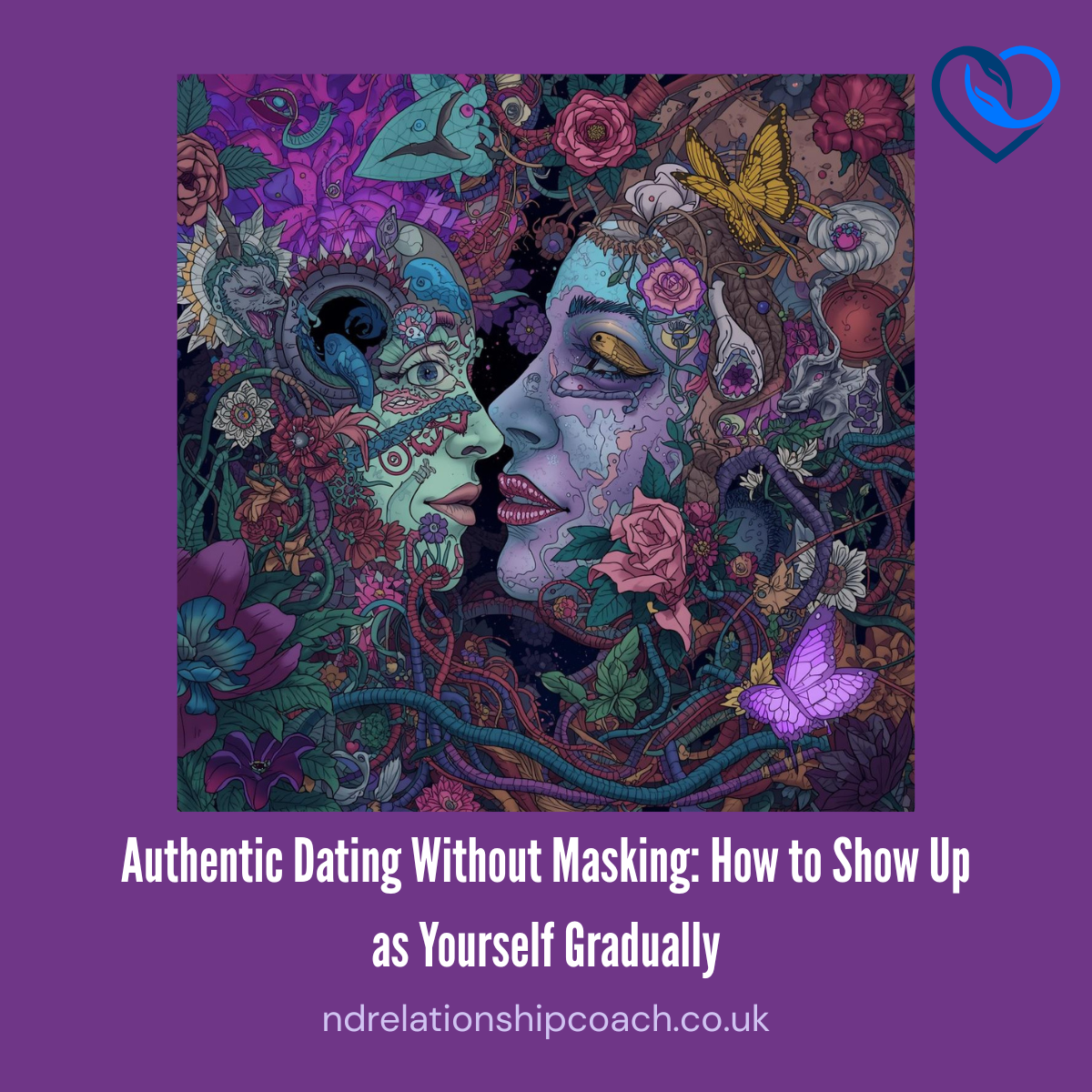
Authentic Dating Without Masking: How to Show Up as Yourself Gradually
Dating advice often encourages people to “just be yourself.” While that may sound simple, it can feel much more complicated for some neurodivergent women.
If you’ve spent years adapting your behaviour, hiding your needs, or changing the way you communicate to fit in, showing your authentic self may not happen overnight. Masking may develop over time as a way of navigating social situations, workplaces, friendships and relationships. Deciding when to let go of that masking is personal, and there is no single right approach.
If you’re looking for guidance on authentic dating without masking, the goal isn’t to reveal everything about yourself immediately. Instead, it’s about gradually building a relationship where you feel increasingly comfortable expressing your needs, preferences, and personality while maintaining healthy privacy and boundaries.
This guide explores what authenticity can look like in dating, how to approach self-disclosure in dating at your own pace, and how to protect your wellbeing without feeling pressured to hide who you are.
In dating, masking may involve hiding your natural communication style, suppressing preferences or copying behaviours that you believe others expect from you.
How Do I Date Authentically Without Masking?
Authentic dating does not mean sharing every thought or personal experience on the first date. It also does not mean ignoring mutual respect, consent, privacy or personal safety.
Instead, dating without masking can involve making gradual choices that allow another person to know the real you over time.
That might include
- communicating in a way that feels natural
- choosing date environments where you can feel comfortable
- expressing preferences and boundaries
- allowing your personality and interests to be visible
- deciding what personal information you want to share and when
Authenticity isn’t about perfection. It’s about creating space for genuine connection while respecting your own comfort level.
What Authenticity Can Look Like in Dating
Authenticity is not one decision that you make at the beginning of a relationship. You can allow different parts of your personality, preferences and needs to become visible as trust develops.
Authenticity Is Not the Same as Oversharing
Being authentic does not require you to share everything immediately. New relationships usually involve learning about one another gradually.
You can communicate honestly while keeping parts of your personal life private until you feel ready. Privacy is not the same as dishonesty.
Expressing Everyday Preferences
Authenticity also means allowing your everyday preferences to be seen.
Examples include
- suggesting a quieter meeting place
- asking for a shorter first date
- explaining how you prefer to communicate
- saying when you need additional time to think
- declining an activity that would feel uncomfortable
- sharing an interest that genuinely matters to you
Everyday preferences can help another person understand you without requiring an immediate conversation about diagnosis or personal history.
Share Personal Information at Your Own Pace
You may be unsure how much personal information to share during the early stages of dating.
There isn’t a universal answer.
Some people feel comfortable discussing their neurodivergence early on. Others prefer to wait until they’ve built more trust. Some may decide not to discuss it at all.
All of these choices can be valid.
Questions to Consider Before Sharing
Rather than asking, “Should I tell them everything now?” consider asking
- How much trust has developed?
- Why do I want to share this information?
- Would sharing help me communicate a need?
- Do I feel safe and comfortable having this conversation?
- Am I choosing freely or responding to pressure?
- What would I prefer to keep private for now?
These questions encourage thoughtful decisions instead of rushing into disclosure.
A Gradual Approach to Disclosure
You may begin by sharing your interests, everyday preferences or communication style without discussing diagnosis or personal history.
For example
Early conversations
You might simply share your interests, communication style, or preferences without discussing diagnosis or personal history.
As trust develops
You may choose to explain certain needs, routines, or communication preferences that help the relationship work well.
When you feel ready
If you decide to discuss your neurodivergence, you can do so when it feels appropriate for you—not because you think you have to.
Maintain Your Boundaries
Authenticity does not require you to remove your boundaries. You can decide:
- how quickly you want the relationship to progress
- which subjects you would prefer to discuss later
- how often you want to communicate
- how much personal history you want to share
- what helps you feel comfortable during dates
These boundaries may change as trust develops, but they should not change because someone pressures you.
Do I Have to Tell Someone I Am Neurodivergent?
No. Whether and when you tell someone that you are neurodivergent is your decision.
You may choose to discuss your communication preferences or support needs without using a diagnostic label. You may also wait until more trust has developed before sharing personal information.
Consider your privacy, comfort, safety and whether disclosure would help you communicate something relevant to the relationship. Waiting does not automatically mean that you are being dishonest.
Communication Scripts You Can Adapt
Knowing what to say can feel difficult, especially when you’re trying to balance authenticity with privacy. Having a few prepared phrases can make conversations feel more manageable without making them sound rehearsed.
These examples are optional. Adjust them so they reflect your own personality and communication style.
Explaining a Preference
“I usually enjoy quieter places because I find it easier to have a proper conversation.”
This shares a genuine preference without revealing more than you’re comfortable discussing.
Asking for a Different Pace
“I’d like to take things one step at a time. I enjoy getting to know people gradually.”
This sets expectations while leaving room for the relationship to develop naturally.
Responding to Questions About Yourself
“I’d rather talk about that once we know each other a little better.”
It’s okay to protect your privacy while still being warm and respectful.
Choosing to Share
If you decide you want to discuss your neurodivergence, you might say:
“There’s something about the way I experience the world that I’d like to share when the timing feels right. I’m happy to answer questions if we both feel comfortable having that conversation.”
This communicates openness without suggesting that you owe someone immediate disclosure
Setting a Boundary
“I’m happy to talk about that, but I’d prefer to do it another time.”
Boundaries can be clear, kind, and respectful at the same time.
What If a Date Responds Disrespectfully?
You cannot control how another person will respond when you express a preference, disclose personal information or set a boundary.
No communication strategy can guarantee a positive response. Another person’s reaction may provide useful information about their communication style, expectations and respect for your boundaries.
If a date responds in a way that feels dismissive, judgmental, or disrespectful, try to remember that their reaction provides information, but it does not determine your worth
Before deciding what to do next, you might ask yourself
- Did I feel respected?
- Was I able to express myself clearly?
- Did the other person listen or make assumptions?
- Did I feel pressured to share more than I wanted?
- Were my boundaries accepted?
- Do I feel safe and comfortable continuing contact?
These questions can help you reflect on whether the relationship feels compatible with your values and needs.
Give Yourself Time to Reflect
You don’t have to decide immediately whether to continue seeing someone.
If you need time to process what happened, it’s perfectly reasonable to take a step back before responding.
Some people find it helpful to
- write down what happened
- talk with a trusted friend
- discuss the experience with a coach or therapist
- reflect on how the interaction made them feel
Creating space for reflection can make future decisions feel clearer.
Consider Whether You Feel Compatible
Dating is not only about whether another person accepts you. You are also deciding whether their behaviour, values and communication style are compatible with yours. It’s also about whether the relationship feels healthy and comfortable for both people.
If someone consistently dismisses your boundaries, pressures you to share more than you want to, or makes you feel unable to be yourself, it’s reasonable to consider whether the relationship is a good fit.
Authenticity cannot guarantee acceptance. It can, however, help you evaluate compatibility without maintaining a version of yourself that feels uncomfortable or unsustainable.
Frequently Asked Questions
How do I date authentically without masking?
Authentic dating may involve expressing more of your natural personality, preferences and communication needs over time while maintaining privacy, boundaries and personal safety.
How much should I share early in a relationship?
There is no universal amount or timeline. Consider how much trust has developed, why you want to share and whether you feel comfortable and safe doing so.
Do I have to tell someone I am neurodivergent?
No. Disclosure is your decision. You may communicate relevant preferences or support needs without sharing a diagnosis or personal history.
Can I be authentic without talking about my diagnosis?
Yes. Authenticity can include expressing your interests, communication style, preferences and boundaries without using a diagnostic label.
What if someone loses interest after I set a boundary?
You cannot guarantee how another person will respond. Their reaction may help you assess whether the relationship supports mutual respect and compatibility.
Further Reading and Next Steps
Dating authentically is often a gradual process. Expressing everyday preferences, setting boundaries and sharing personal information when you feel ready can help you assess whether a relationship allows you to feel respected and comfortable.
You may also find these guides helpful:
- Dating Without Masking: A Neurodivergent Woman’s Practical Guide
- Dating as an Autistic Woman: A Practical Guide to Pace, Communication and Support
- Dating Advice for Neurodivergent Women: Build a Values-Led Dating Filter
To explore the subject in more detail, read the Dating Without Masking Guide for additional reflection exercises and practical communication ideas.
Related Posts
Why Healthy Love Can Feel Uncomfortable
When calm feels unfamiliar, it doesn’t always mean something is missing. Have you ever met…
Maybe It’s Not Your Taste in Partners. Maybe It’s Your History.
Maybe It’s Not Your Taste in Partners. Maybe It’s Your History. How our experiences quietly…
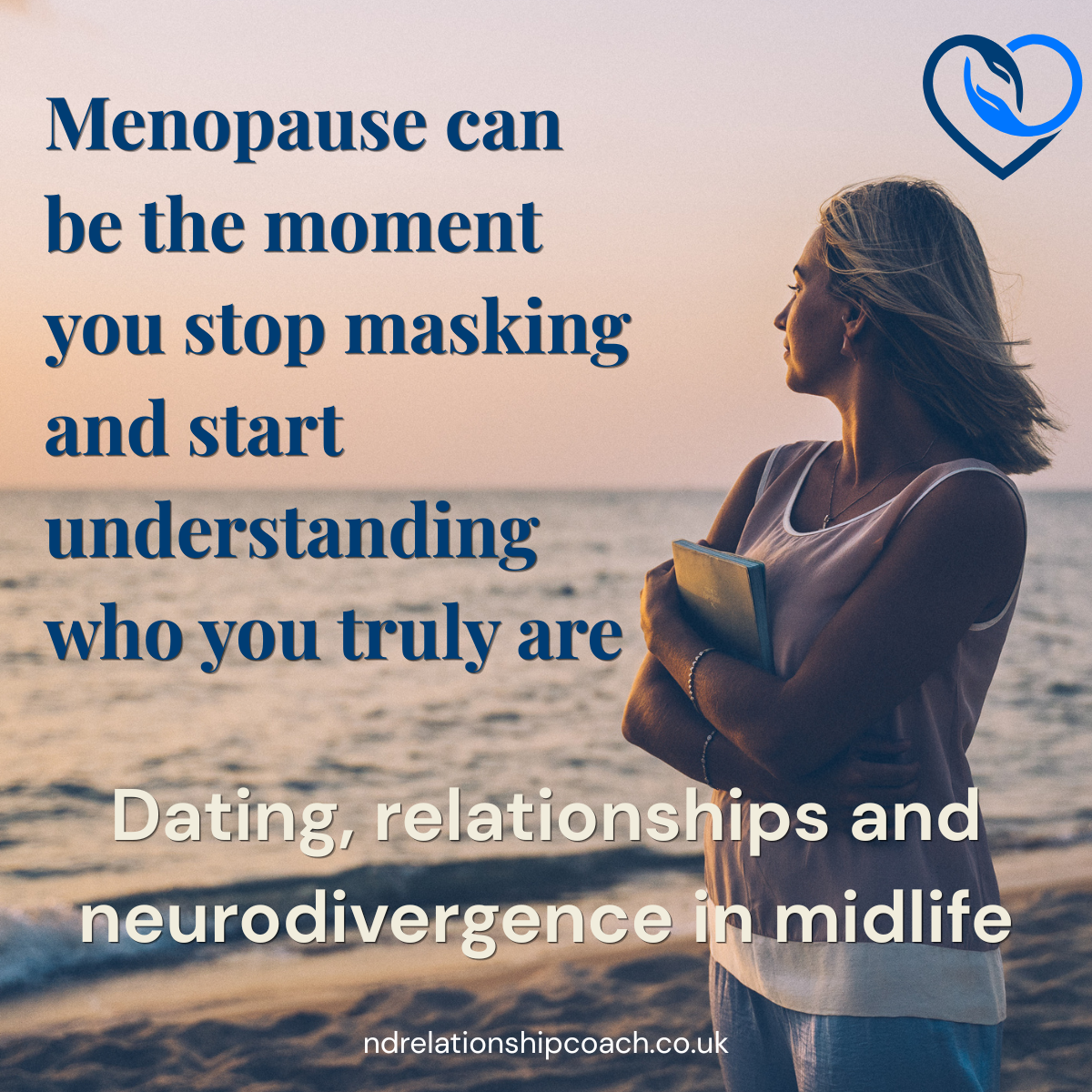
Menopause Can Be the Moment You Stop Masking and Start Understanding Who You Truly Are
Menopause Can Be the Moment You Stop Masking and Start Understanding Who You Truly Are…
When it’s not love, it’s fear (how to tell the difference in dating)
When it’s not love, it’s fear (how to tell the difference in dating) I was…